
Dog Peeing on the Christmas Tree? Block Access First
Keep your dog away from the tree and skirt while you clean. If you cannot watch, close off the room or block access. When you can supervise, calmly take your dog outside if they seem ready to pee.
If indoor accidents are new, contact your veterinarian before assuming this is marking. Humane World recommends ruling out medical causes. The American Kennel Club explains that indoor urination can have several causes.
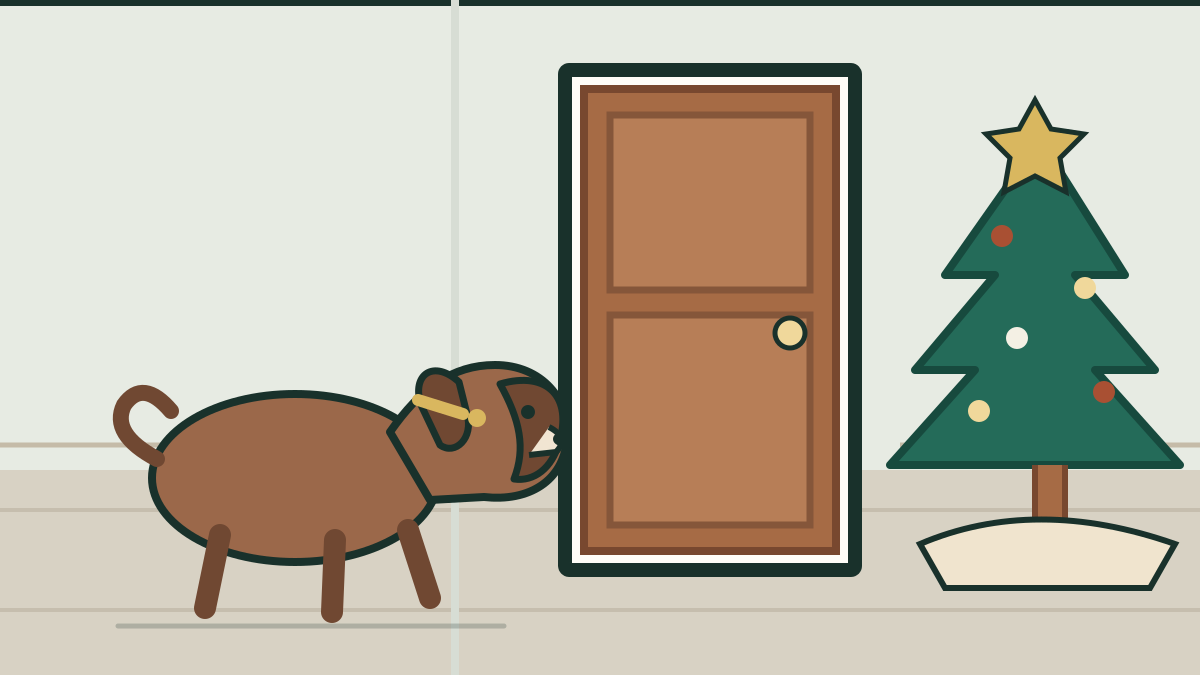
Separate the dog from the tree, then clean the right surface
For a visiting dog, start with separate spaces rather than free access to the tree. Put a soiled skirt away until it has been cleaned. Do not scold or punish an accident; Humane World recommends calm outdoor redirection.
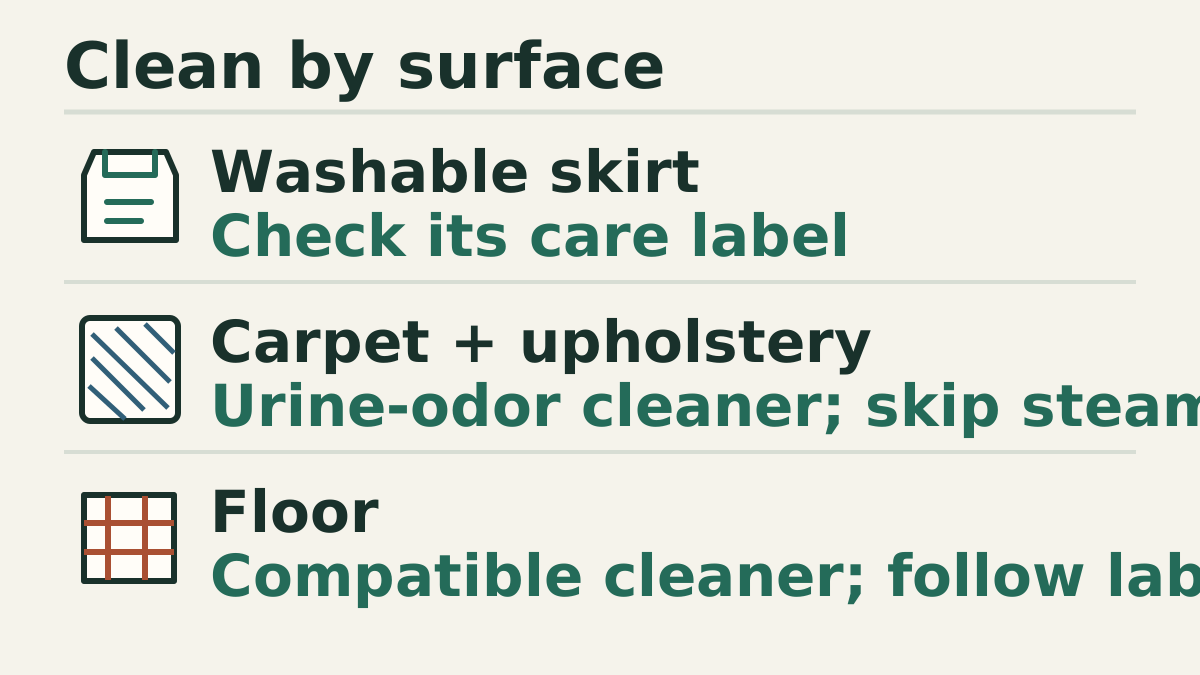
Treat the skirt and floor as different cleanup jobs. Check the skirt’s care label before washing it. Use a pet urine-odor cleaner only on surfaces its directions allow, such as the affected fabric, carpet, or flooring.
Humane World’s cleaning guidance advises against steam cleaning urine-stained carpet or upholstery. It also cautions against ammonia or vinegar cleaners: strong chemical odors may encourage a dog to mark the spot again. Do not rely on a homemade repellent recipe.
Use the pattern only to choose your next step
| What you notice | What to do next |
|---|---|
| Urine is limited to the tree or skirt | Block access, supervise, and clean the affected surface. This pattern does not prove marking. |
| Indoor accidents are new or happening in other places | Contact your veterinarian before treating it as a marking issue. |
| Your dog strains but no urine comes out | Seek an emergency veterinarian immediately. |
| You see blood, more frequent urination, or straining while urine still passes | Contact a veterinarian promptly. |
VCA’s emergency guidance lists straining without urine as a life-threatening sign. Seek help immediately rather than trying a training or cleaning change first.
For now, keep the dog away from the tree, clean the skirt and floor with an appropriate method for each surface, and note whether accidents happen anywhere else. If the pattern is new or changes, call your veterinarian before labeling it marking.
Research notes
Sources behind this guide
Written and source-checked by Puni Pet Guides Editorial Team · Reviewed Nov 13, 2026
This guide synthesizes the public references below; it does not report hands-on product testing or independent veterinary review.
Review scope: practical context, source traceability, and clear non-diagnostic boundaries. Diagnosis and treatment decisions stay with veterinarians.