
Everyday dog care
Dog Chews Up Bed? What to Do Next
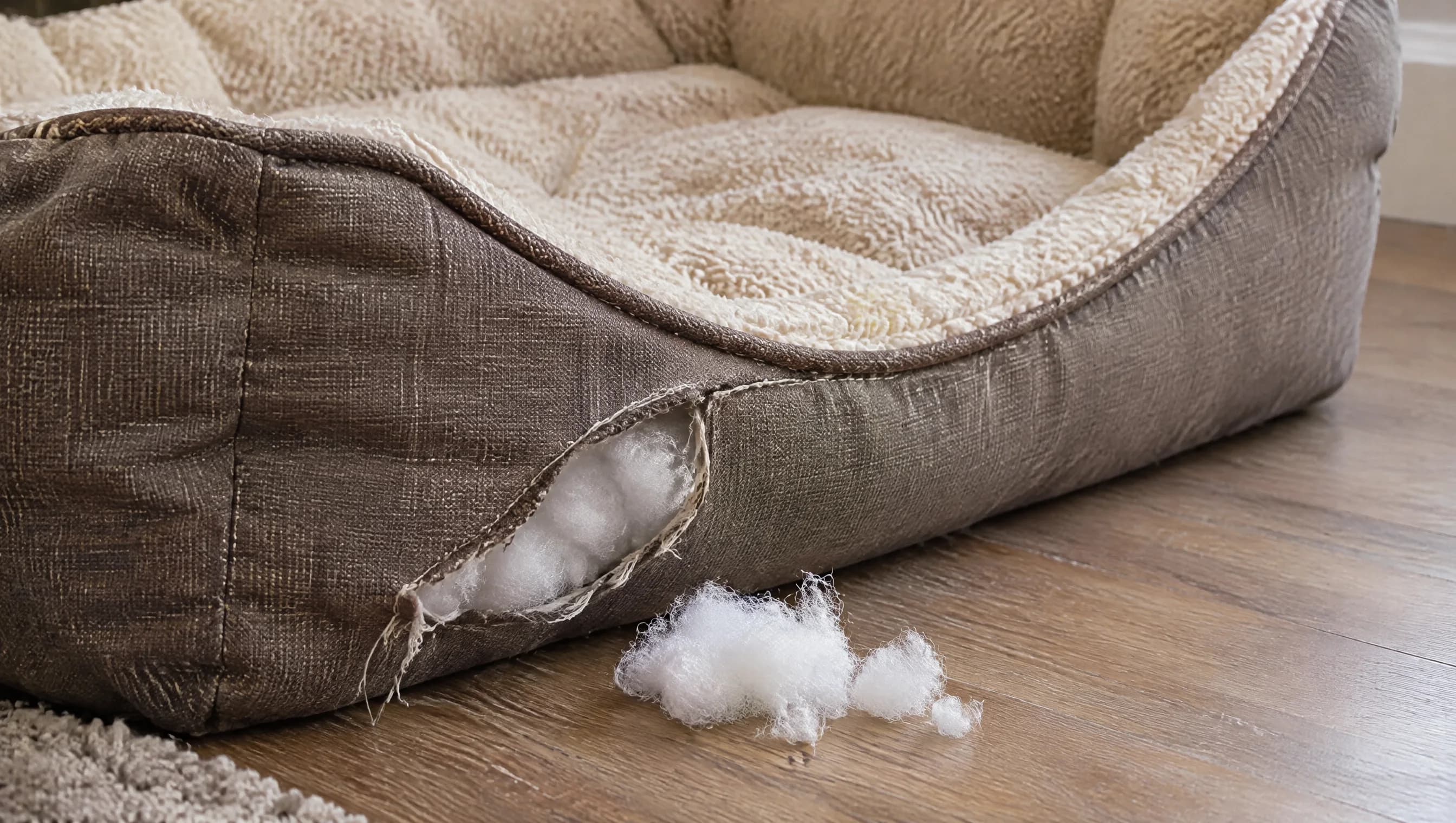
If your dog chews up a bed, move the damaged bed out of reach and check what is missing. If you saw your dog swallow any material or a piece may be missing, call your veterinarian. A torn seam alone does not prove that your dog swallowed anything. Ask the vet what to do; do not estimate a safe amount or wait time based on the damage.

Some non-digestible items, if swallowed, can lodge in the digestive tract and cause illness or obstruction. Signs vary with the item and circumstances; vomiting, loss of appetite, and abdominal pain are among the signs the American College of Veterinary Surgeons lists. Those signs—or their absence—cannot tell you at home what happened, so ask a veterinarian what to do (ACVS).
Manage chewing before using the bed again
Chewing can be normal at any age, and damage alone does not reveal why your dog chose the bed. The ASPCA recommends managing access, supervising, and teaching dogs which items are okay to chew. Simply putting out toys is not enough (ASPCA).
When you cannot supervise, keep your dog away from the torn bed. While you are together, watch for your dog turning to the bedding and offer an appropriate chew toy. Do not punish your dog after you find damage, and do not offer old cushions or shoes as substitutes: the ASPCA says these can confuse the rules about what is okay to chew.
Note when the chewing happens, especially if it occurs only while your dog is alone or is most intense then, and whether you also see whining, barking, pacing, or restlessness. The ASPCA lists that pattern among signs associated with separation anxiety, but chewing alone does not establish it. If taking an item away could provoke aggression, get qualified behavior help rather than attempting it yourself.
| Situation | Next step |
|---|---|
| Material may have been swallowed | Call your veterinarian; do not guess a safe amount or wait time based on the damage to the bed. |
| Chewing while supervised | Keep damaged bedding out of reach, watch the pattern, and teach your dog what is appropriate to chew. |
| Recurring distress or guarding | Note when it happens; get qualified behavior help if taking an item away could provoke aggression. |
Research notes
Sources behind this guide
Written and source-checked by Puni Pet Guides Editorial Team · Reviewed Nov 15, 2026
This guide synthesizes the public references below; it does not report hands-on product testing or independent veterinary review.
Review scope: practical context, source traceability, and clear non-diagnostic boundaries. Diagnosis and treatment decisions stay with veterinarians.