
My Cat Walked on Ice Melt: What Should I Do?
If your cat walked through ice melt or may have licked it, move them away from the residue, then call either your vet or ASPCA Poison Control at (888) 426-4435 now. Gently wipe their paws with a damp cloth if you can do so without delaying the call. If your cat is struggling to breathe or having a seizure, go straight to an emergency veterinary clinic.
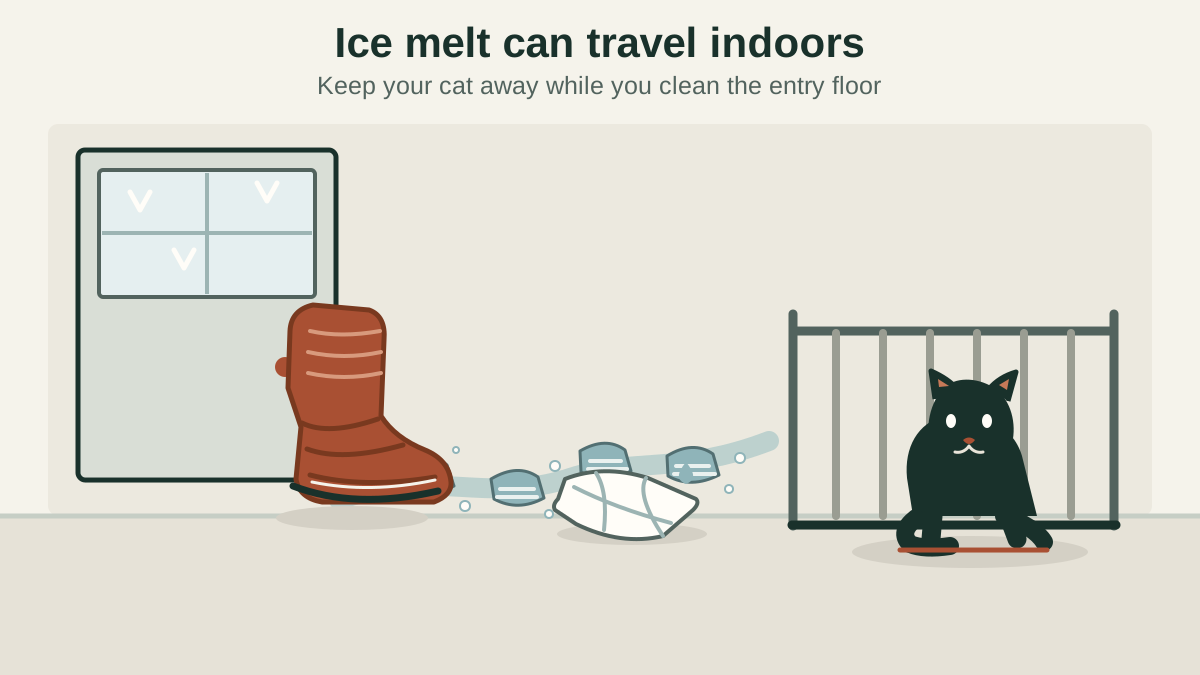
If the salt is only on the floor
If you know your cat stayed clear of the residue, keep them out of the entryway while you clean up the granules or slush. Check the doormat, the floor around your shoes, and anywhere wet footprints lead. If you're unsure whether your cat stepped in it or licked it, call for advice.
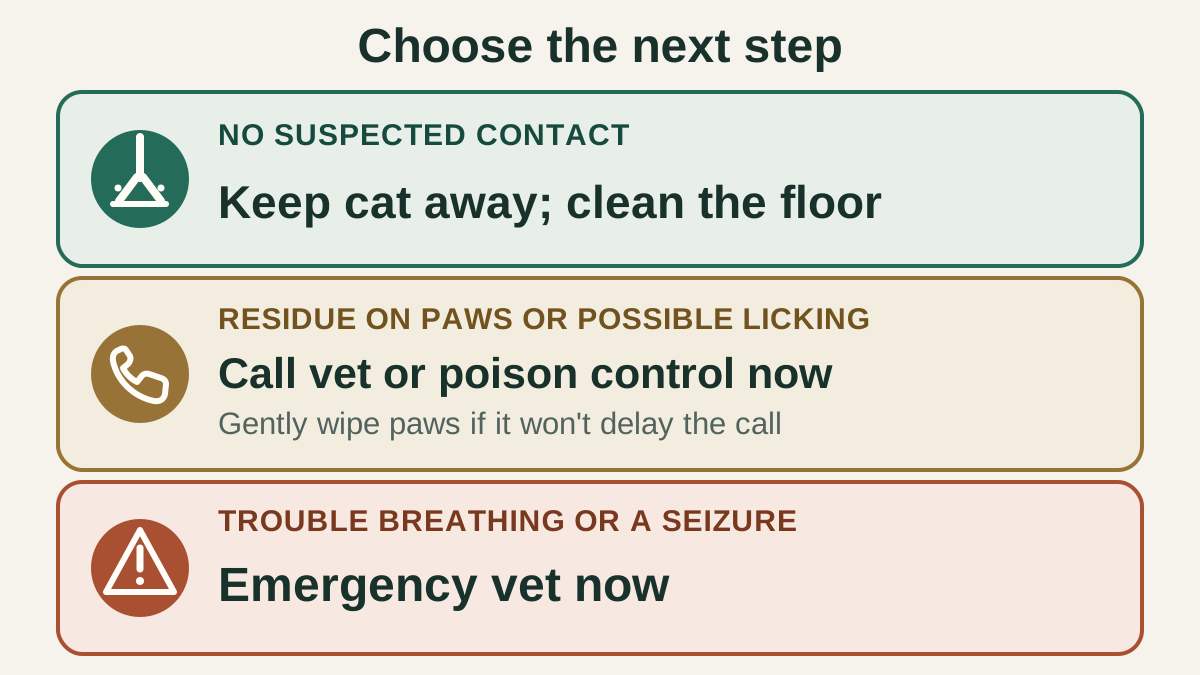
If your cat touched or licked the ice melt
A cat can swallow residue while grooming. If you can wipe their paws safely, use a damp cloth and check between their toes. Don't force it if your cat resists, and don't put off the call. Michigan's winter pet guidance also recommends checking paws after pets come inside.
Call even if your cat looks fine. Ice melt products contain different ingredients, and the type and amount matter. A “pet-friendly” label doesn't tell you what to do after an exposure. Don't try to make your cat vomit or give them a home remedy.
What to have ready when you call
If you can find the package without delaying care, take a photo of the label. Tell the vet or poison specialist when it happened, whether your cat walked through or licked the residue, and whether you've noticed any symptoms. If you don't know how much they may have swallowed, say so.
For dogs who use the same doorway, see when to use boots or paw wax for snowy walks.
Research notes
Sources behind this guide
Written and source-checked by Puni Pet Guides Editorial Team · Reviewed Nov 9, 2026
This guide synthesizes the public references below; it does not report hands-on product testing or independent veterinary review.
Review scope: practical context, source traceability, and clear non-diagnostic boundaries. Diagnosis and treatment decisions stay with veterinarians.