
What to Do if a Cat Is Hiding in Your Car Engine
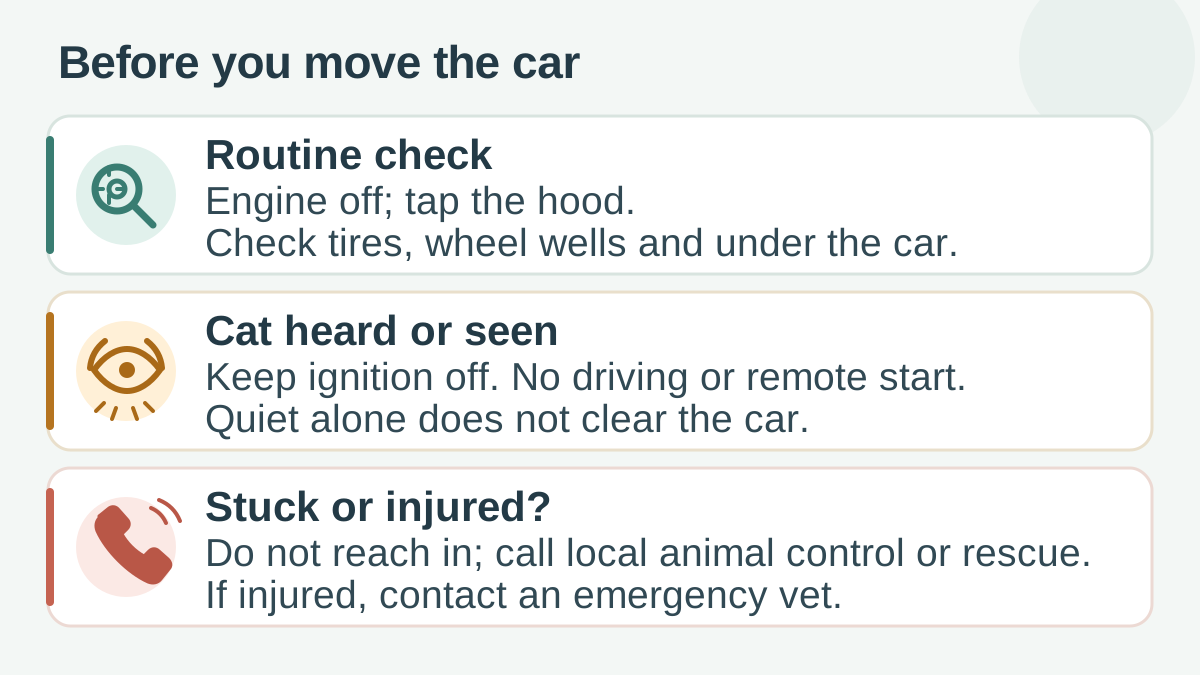
If you hear a cat near your car or still suspect one may be hiding inside, keep the ignition off. Do not drive or use remote start. If you still think a cat may be inside after a visual check, leave the car parked and call local animal control or an animal rescue. A quiet vehicle does not mean the cat is gone.

Before a normal start
NC State College of Veterinary Medicine recommends tapping the hood or taking a quick look before getting in because cats may shelter near warm engines or tires. Alley Cat Allies also recommends checking under the hood and around the tires and wheel wells.
Keep the ignition off while you check from a safe position. Do not reach into gaps or move parts. A sound alone does not confirm a cat is there. If you still think one may be inside, do not start the car to find out.
If you hear or see a cat
If the cat leaves and is clearly away from the vehicle, check around the car again before moving it. If you still suspect a cat is inside, cannot confirm it has moved away, or can still hear it, leave the vehicle parked and call local animal control or an animal rescue for advice. Ask who can respond in your area.
If the cat is stuck or injured
Lort Smith Animal Hospital says to keep the ignition off and call for help if a cat is stuck or unresponsive. Do not try to pull it out or take anything apart. If the cat appears injured, contact an emergency veterinarian for guidance. Alley Cat Allies recommends veterinary care for an ill or injured cat.
NOCO Humane describes a Colorado Animal Protection & Control team responding to a cat trapped in an engine and arranging urgent veterinary care. Tell the responder where the car is parked and where you last heard or saw the cat.
If cats visit your parking area often, see where to place an outdoor winter cat shelter.
Research notes
Sources behind this guide
Written and source-checked by Puni Pet Guides Editorial Team · Reviewed Nov 9, 2026
This guide synthesizes the public references below; it does not report hands-on product testing or independent veterinary review.
Review scope: practical context, source traceability, and clear non-diagnostic boundaries. Diagnosis and treatment decisions stay with veterinarians.