
Do You Have to Take Your Cat Out of the Carrier at TSA?
Yes, for standard TSA screening on a U.S. domestic flight. Keep your cat in the carrier until the TSA officer tells you to take them out. If your cat may bolt or struggle, tell the officer before opening the carrier and ask whether private screening is available; a room is not guaranteed.
In a TSA demonstration reported by NFTA at Buffalo Airport, the cat was removed just before screening, and only the empty carrier went through the baggage X-ray. The report also describes private screening, where the cat stayed in the carrier on the way to the room. Never put your cat in the scanner.
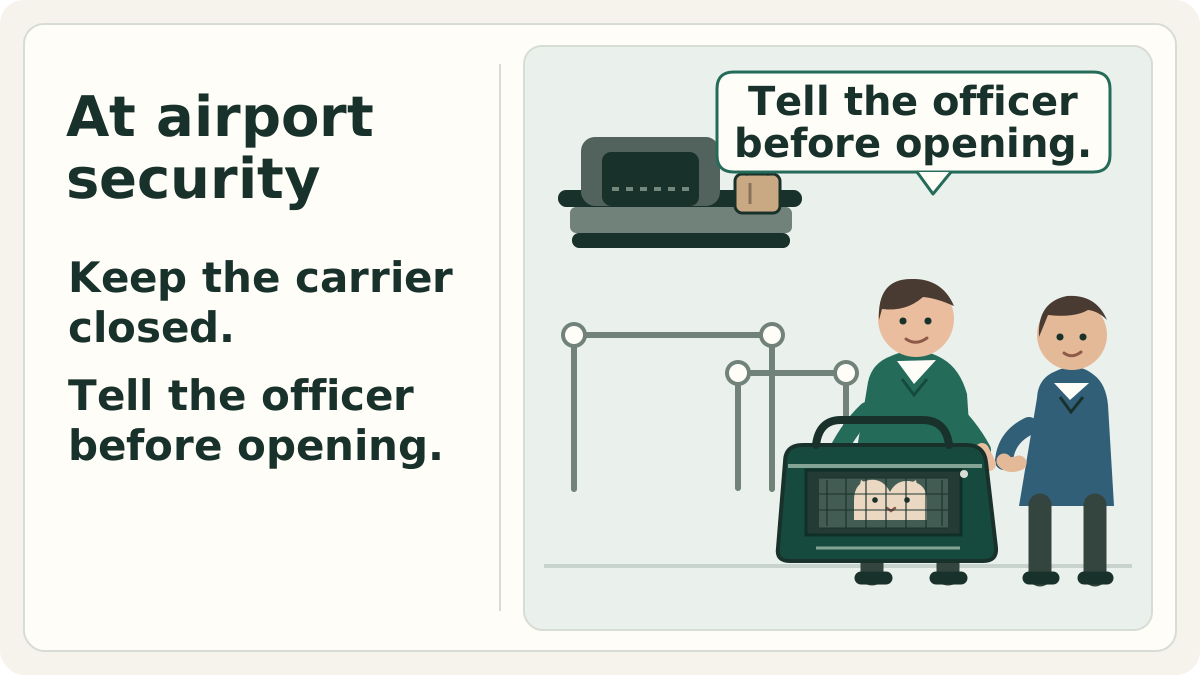
Before opening the carrier
If you’re concerned about escape, ask before opening the carrier. You could say: “My cat might bolt. Can we do the screening in a private room?” Keep the carrier closed while you wait for the officer’s instructions.
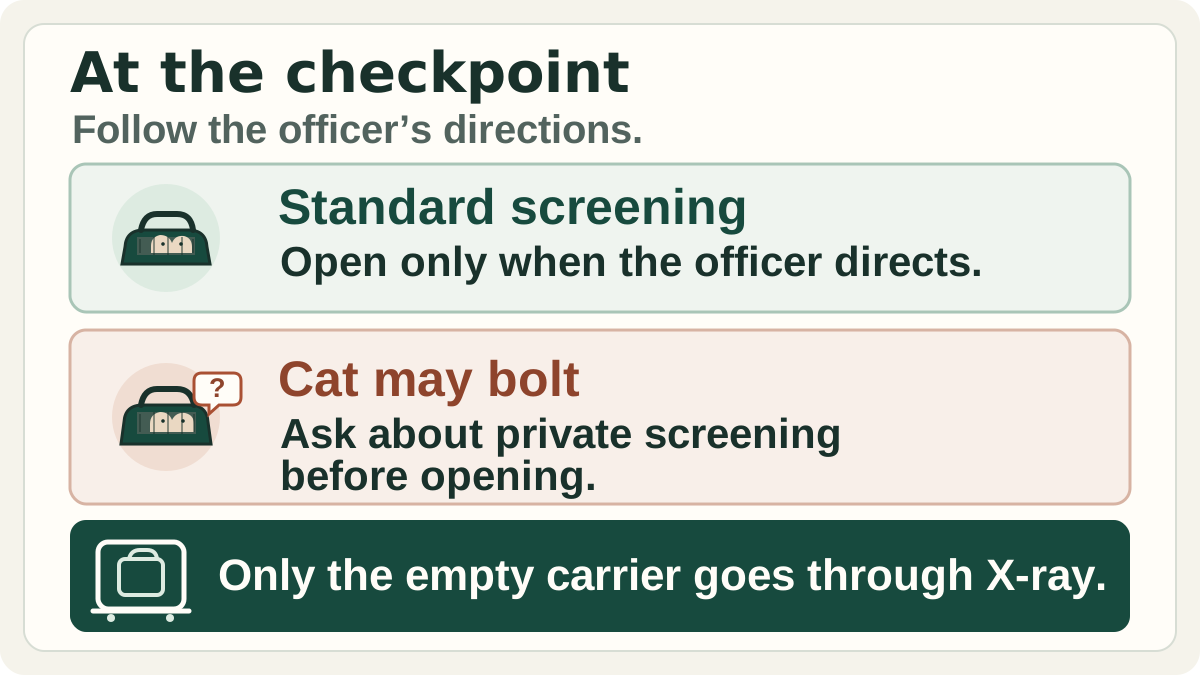
If standard screening is directed
When the officer directs you to take your cat out, remove them just before the carrier is screened. Put only the empty carrier on the X-ray belt. Keep your cat with you and follow the officer’s directions through screening. If you’re unsure what to do or when you can move, ask rather than transferring your cat on your own.
After screening, put your cat back in the carrier in the area set aside for repacking, away from the checkpoint. If you don’t see where to go, ask the officer. See Phoenix Sky Harbor’s TSA guidance.
Airport screening is separate from airline approval
The FAA explains that airlines set their own cabin pet and carrier policies, so confirm the rules with your airline before travel. That is separate from the TSA checkpoint process.
For practice before travel day, see our carrier acclimation routine.
If you are flying with two cats, check whether your airline allows one shared carrier before choosing a bag.
Research notes
Sources behind this guide
Written and source-checked by Puni Pet Guides Editorial Team · Reviewed Nov 10, 2026
This guide synthesizes the public references below; it does not report hands-on product testing or independent veterinary review.
Review scope: practical context, source traceability, and clear non-diagnostic boundaries. Diagnosis and treatment decisions stay with veterinarians.