
Can Dogs Eat Sweet Potatoes at Thanksgiving?
Yes—many dogs can have a small amount of plain, cooked sweet potato. If this would be your dog’s first taste, ask your veterinarian beforehand; VCA recommends checking before introducing a new food. The key is preparation: plain sweet potato is different from a casserole or a spoonful taken from a mixed holiday dish.
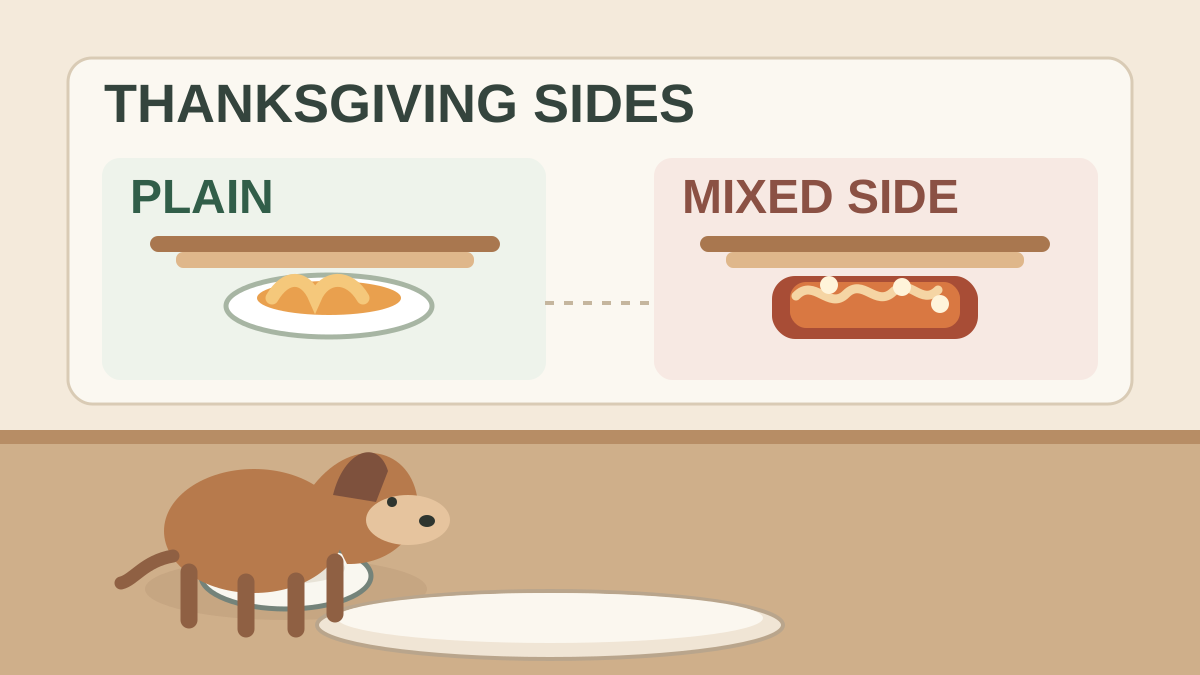
“Plain” means the sweet potato has not been mixed with toppings, seasoning, sauce, or other ingredients. If you cannot tell what went into the dish, do not offer it as a treat.
Keep the sweet potato plain
VCA identifies plain, cooked sweet potato as an option, and AAHA lists a small amount of plain sweet potato as a Thanksgiving treat. That does not make every sweet potato dish suitable. The sources support a simple preparation and a small serving, but do not set a precise portion for an individual dog.
Check every topping and ingredient
The American Kennel Club distinguishes plain mashed sweet potato from versions topped with brown sugar, marshmallows, maple syrup, or other sugary ingredients. Holiday recipes can also add butter, salt, seasonings, or richer sauces. Read the recipe or package label rather than relying on a dish’s name.
| Dish or label | How to decide |
|---|---|
| Plain, cooked sweet potato | A small amount may be an option; ask your veterinarian before a first taste. |
| Casserole with toppings | Skip the mixed side; brown sugar, marshmallows, maple syrup, or other additions mean it is not plain. |
| Dish with onion or garlic | Do not share it; AAHA lists both among ingredients pets should avoid. |
| Sugar-free or unclear dish | Check for xylitol and other additions; if your dog ate it, contact your veterinarian with the label or recipe. |
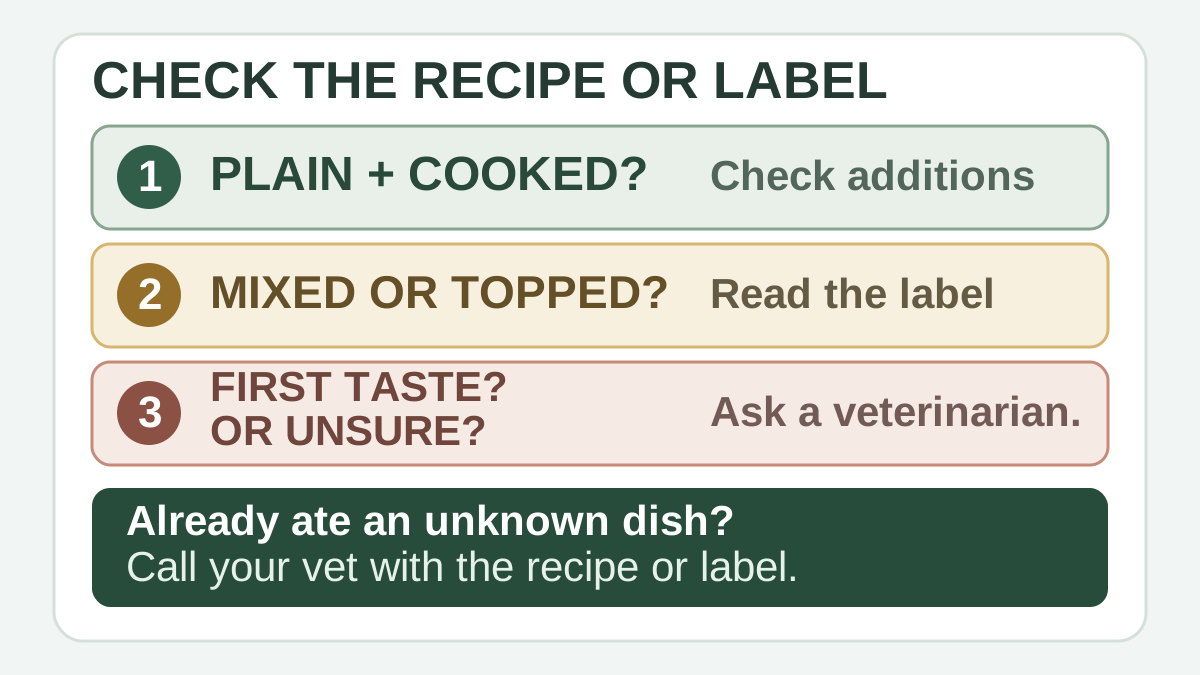
If your dog eats a mixed dish
Contact your veterinarian or a local emergency veterinary hospital if your dog ate food with onion, garlic, xylitol, or another concerning ingredient. AKC advises calling a veterinarian promptly about potentially toxic food rather than waiting for signs to appear. Have the recipe or package label ready so the veterinary team can identify what was in the dish.
Research notes
Sources behind this guide
Written and source-checked by Puni Pet Guides Editorial Team · Reviewed Nov 15, 2026
This guide synthesizes the public references below; it does not report hands-on product testing or independent veterinary review.
Review scope: practical context, source traceability, and clear non-diagnostic boundaries. Diagnosis and treatment decisions stay with veterinarians.