
Can Dogs Eat Pecans? Skip the Nuts and Pie
No. Do not share pecans with your dog, whether plain or baked into a pie or another dessert. Pecans are high in fat; pie and other sweets may add more fat or sugar. If your dog has already eaten pecans, contact your veterinarian or an animal poison-control service promptly.
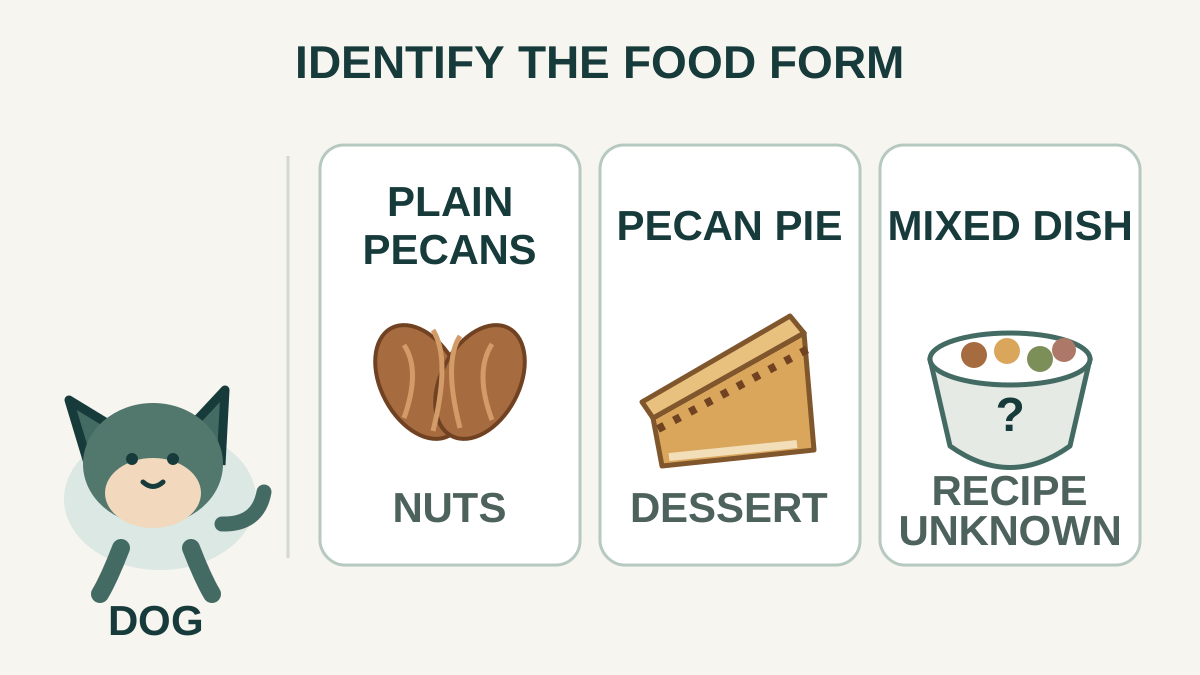
Choose the next step
First, think about whether you’re choosing a treat or responding to an accidental bite:
| Situation | What to do |
|---|---|
| You are choosing a snack | Skip pecans and pecan sweets. Do not offer them as treats. |
| Your dog ate plain pecans | Call your veterinarian or animal poison control promptly. Share the rough amount eaten. |
| Your dog ate pie, a baked good, or an unknown recipe | Call and share the recipe or ingredient label. Explain that the food contained pecans. |
Why pecans are a poor choice
The ASPCA says oils and fats in nuts, including pecans, can cause vomiting and diarrhea. Texas A&M’s toxicologist advises against feeding pecans because dogs can be sensitive to high-fat foods. Some pecans may develop mold that produces toxins harmful to animals. Pecan desserts can contain extra fat or sugar, so they are not appropriate treats for dogs. A pie or baked good also includes more than pecans, so the recipe or ingredient label matters when you call.
If your dog already ate some
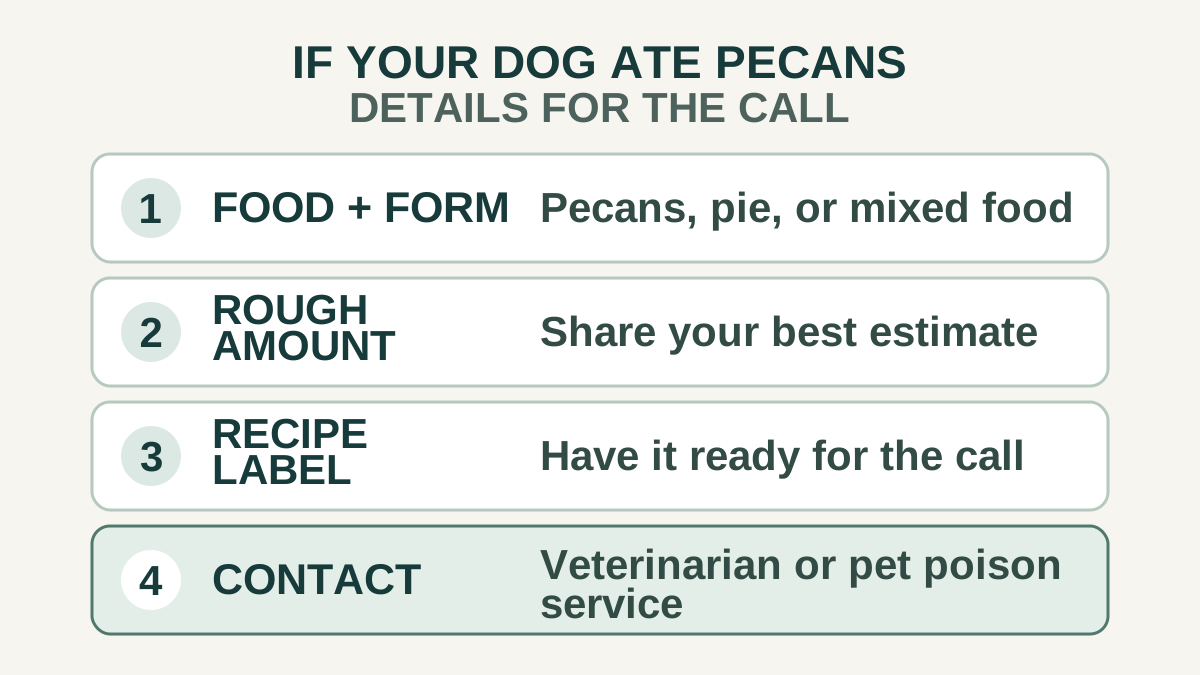
The American Kennel Club recommends contacting a veterinarian right away after pecan ingestion, even if the amount seems small. Do not use a nut count as a safety rule. Tell the veterinarian or poison-control service whether your dog ate plain nuts or a dessert and about how much. If the food was pie or a baked good, have the package label or recipe ready so the professional can assess all of its ingredients. If you do not know the exact amount or recipe, say what you know and what is unknown instead of guessing.
Research notes
Sources behind this guide
Written and source-checked by Puni Pet Guides Editorial Team · Reviewed Nov 15, 2026
This guide synthesizes the public references below; it does not report hands-on product testing or independent veterinary review.
Review scope: practical context, source traceability, and clear non-diagnostic boundaries. Diagnosis and treatment decisions stay with veterinarians.