
Cat care guides · feeding and storage
Can Automatic Feeders Do Wet Food?
Yes—if the exact model is designed for wet food. A timer alone does not tell you how the food is stored while it waits. Check the feeder’s current instructions and the food label before relying on a schedule.
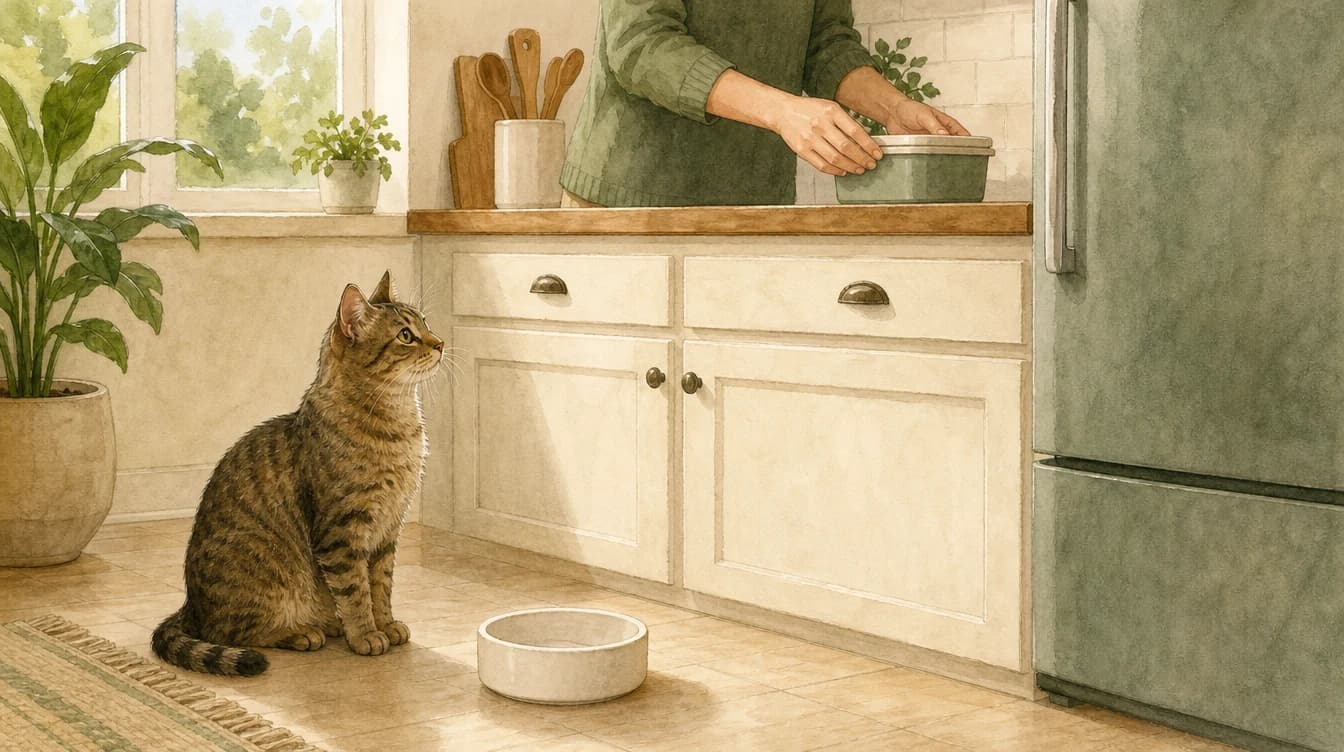
Check the exact model
Find the supported food types, storage method and limits in the current manual, then compare those instructions with the food package. Use directions for the exact model; a product name alone does not describe its storage method.
Check how wet food is stored
A scheduled lid can control when a compartment opens; by itself, that does not tell you what temperature the food reaches. FDA guidance says to place any remaining canned or pouched pet food in the fridge soon after serving, or discard it. Its refrigerator limit is 40°F or colder.
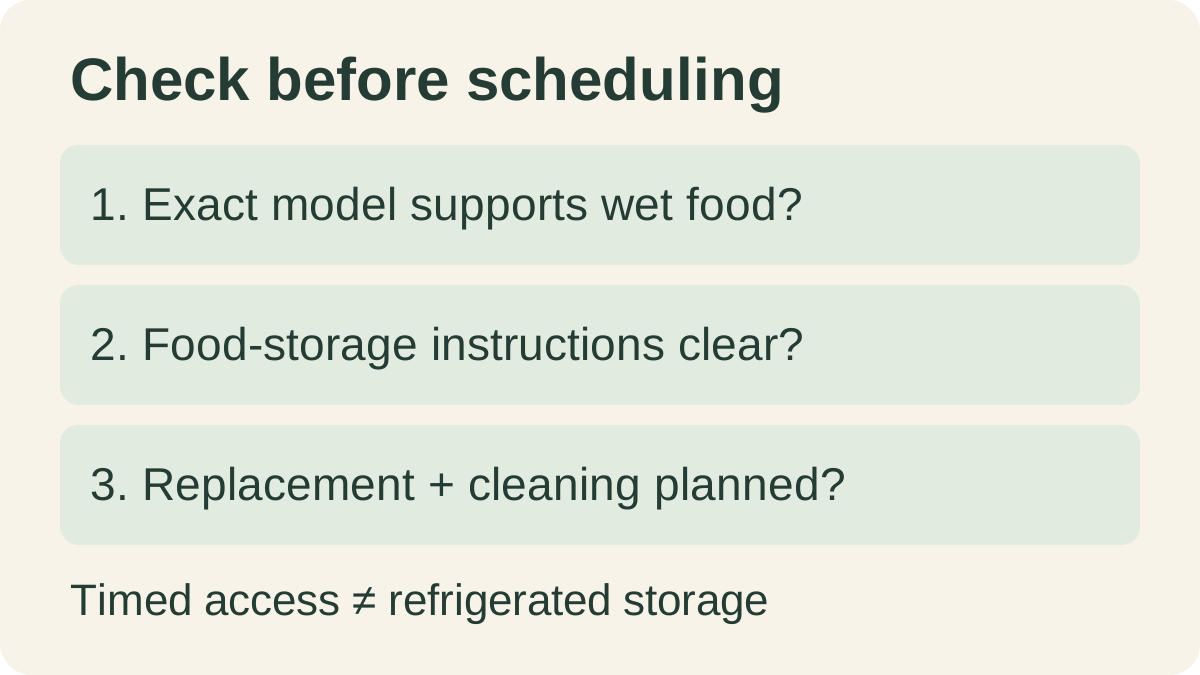
A timer or freshness claim does not replace that storage guidance. If the storage instructions are missing or unclear, keep unused food refrigerated and arrange a fresh serving rather than guessing how long it can stay out.
One model-specific example
The current Petlibro Polar PLAF109 listing says the model is designed for canned or pouched wet food and semi-moist food. Its FAQ reports a manufacturer lab condition of 77°F room temperature with food around 54°F.
That is a manufacturer claim, not an independent test, and it does not establish that food is held at the FDA refrigerator condition of 40°F or below.
What to check before scheduling a meal
Read the exact feeder manual and the food package, and follow their storage directions. Do not infer a safe holding period from the number of scheduled openings or a general freshness statement. For handling, wash your hands for 20 seconds with soap and hot water before and after you touch pet food. Clean and dry the food bowl and any scoop after every use.
If your separate concern is which cat can open a feeder in a multi-cat home, see our SureFeed guide to selective access. It covers access, not wet-food cooling.
Research notes
Sources behind this guide
Written and source-checked by Puni Pet Guides Editorial Team · Reviewed Nov 3, 2026
This guide synthesizes the public references below; it does not report hands-on product testing or independent veterinary review.
Review scope: practical context, source traceability, and clear non-diagnostic boundaries. Diagnosis and treatment decisions stay with veterinarians.